
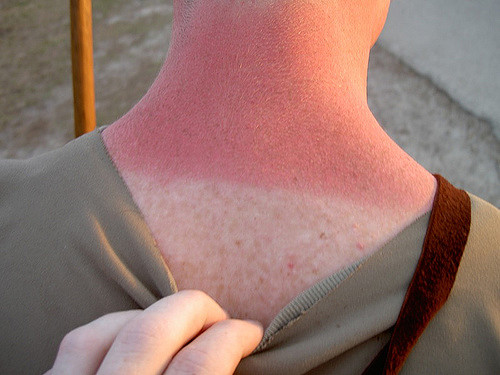
We just had 90-degree days and I am nowhere near a place that should be having 90 degree days right now. Ready or not, it is time to get the sunscreens out.
We are all told to slather ourselves with loads of sunscreen every two hours to prevent getting burned and ultimately to prevent skin cancer. But more and more information is coming out indicating that many sunscreens aren’t exactly safe and might even be doing more harm than good. Did you know that most sunscreen options on the market use chemical filters as the active ingredient to block the sun’s rays? Chemical ingredients come with consequences.

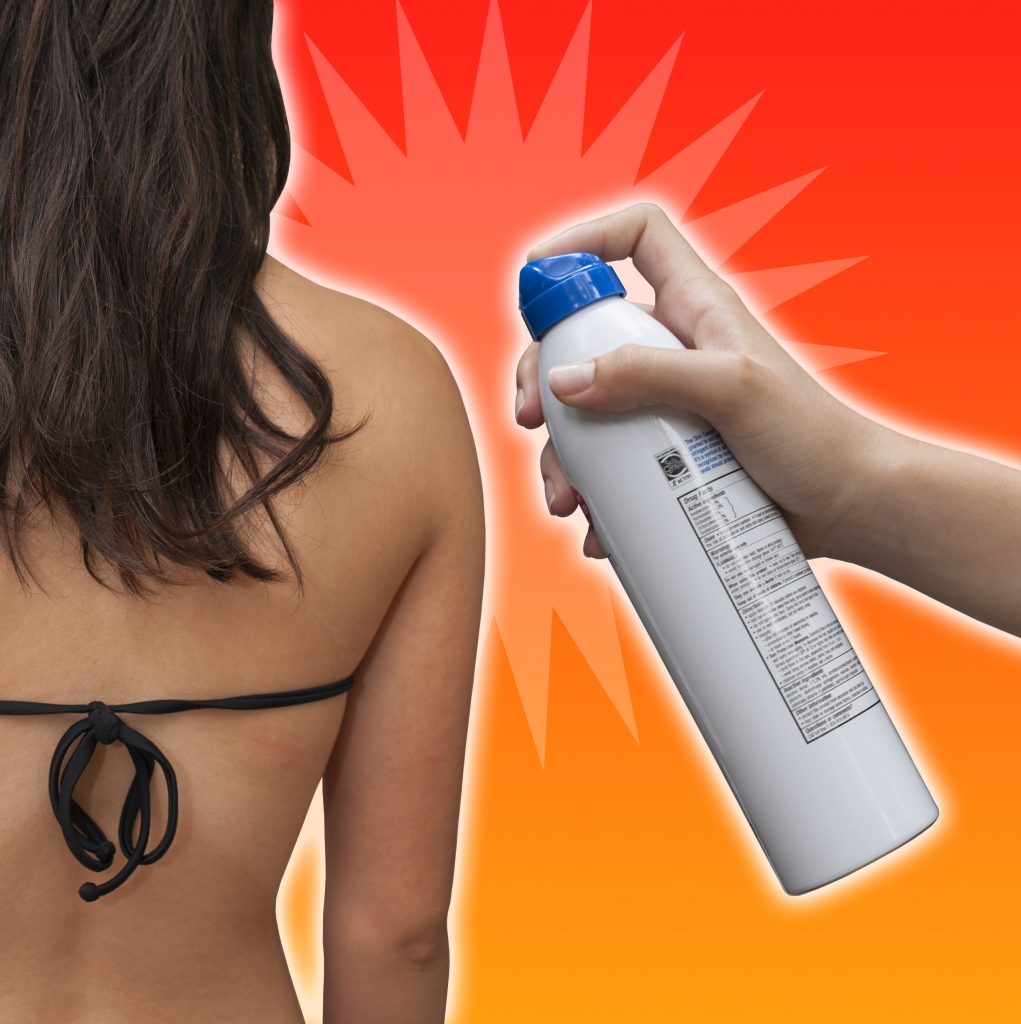 Four things to know about chemical sunscreens:

Endocrine Disruptors
Oxybenzone is one of the most common active ingredients (it’s in about 70% of sunscreens) and is a known endocrine disruptor. It mimics estrogen and is associated with endometriosis and lowered sperm counts. To make matters worse it is often paired with ingredients that help it adhere to the skin but also support penetration into your skin. It has been measured in blood, breast milk and urine samples. According to the CDC, oxybenzone has been detected in over 96% of Americans (Calafat 2008). Not surprisingly, the EWG recommends avoiding oxybenzone. Homosalate and octinoxate are also known endocrine disruptors.Free Radical Formation
Many of the active ingredients, including Oxybenzone, are actually not very stable when they come in contact with sunlight. When the sunlight hits them, their composition changes and forms free radicals. Free radicals attack cell structures and degrade collagen and elastin fibers – aka, they make your skin age.‘Broad Spectrum’ is Not a Regulated Term
Most chemical sunscreens are actually not that awesome at blocking UVA rays and therefore, allow skin cell damage. The FDA isn’t very strict on which products can use this term and which can’t. A product may call itself ‘broad-spectrum’ even when it really isn’t. The challenge here is that UVA damage doesn’t burn you, it just changes the cell structure, so you have no idea it is happening.Allergenic Ingredients
Many of the active ingredients are known skin allergens, including oxybenzone, octinoxate, octocrylene, and avobenzone. When sunscreen products are used over large portions of the body and in large quantities, repeatedly throughout the day, this is a big concern. On the positive side, there is an increasing trend towards more and more physical (mineral) sunscreen options on the market. My favorite active ingredient to use is zinc oxide. Titanium Dioxide is also used as an active ingredient in physical sunscreens, but some research shows it isn’t all that photo-stable either nor is it a strong UVA blocker, so I avoid it.Benefits of Zinc Oxide:
Strong UVA protection in addition to UVB
Zinc Oxide is one of the strongest UVA blockers available to us and it is photo-stable, unlike most of its chemical counterparts. Does not penetrate the skin. When using non-nano particle forms of zinc oxide, the molecules are too large to penetrate the skin. (Always ensure you are using non-nano particles! Better to be safe than sorry.) No known allergic reactions or hormonal interference. Win-win. Safe for coral reefs. So, this is a no brainer.